Romtec Utilities is always working to provide new and useful web content for our visitors and customers, and one of these new features is the ability to search projects as skid-mounted systems. These are complete pump stations that are mounted on prefabricated steel “skids,” so the pump station can be mobile, surface mounted, or used to retrofit an existing sump.
Components that Should and Should Not Go in a Wet Well
Romtec Utilities typically tries to reduce the amount of components located in the wet well on new lift station designs. Keeping the wet well clear from too many components will decrease maintenance concerns and improve the functionality of the system, but there are some components that will improve the wet well functions when included. In a lift station design for wastewater, it is important to understand what components to include in the wet well or not.
Overflow Tanks with a Packaged Lift Station
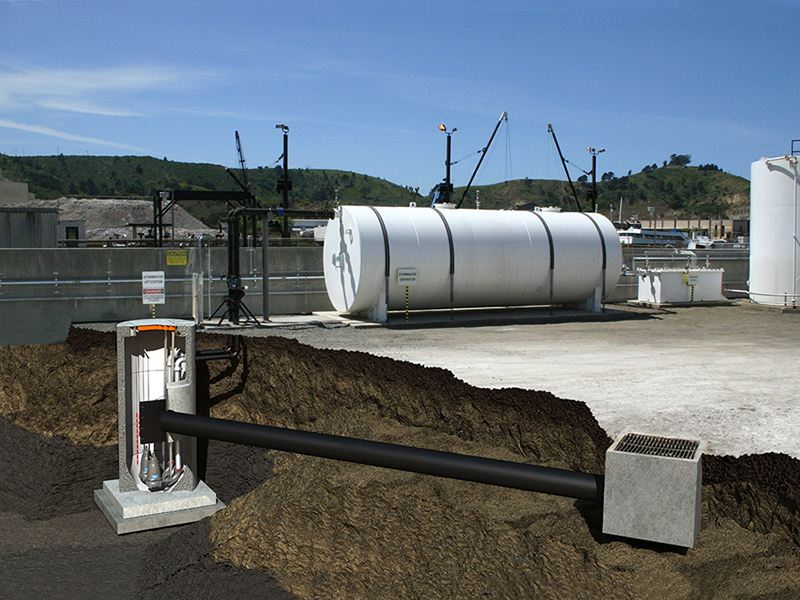
In frequent scenarios, lift stations are subjected to varying peaks of inflowing water and wastewater. There are different reasons for why these varying flow rates occur, but one simple and widespread solution is the overflow tank. Romtec Utilities works with customers to find the best approach for their project to select and purchase an appropriate overflow tank.
Jockey Pumps in Pump Station Design
Romtec Utilities designs pumps stations with jockey pumps for every major water type –wastewater, stormwater, industrial water, & clean water. Jockey pumps in pump stations are small, typically low horsepower, pumps that operate regularly to handle nuisance flows in a system designed for larger peak pumping rates. This allows the pump station to handle a very wide range of flow rates without increasing the wear on the large horsepower pumps.
Interior and Exterior Wet Well Coatings and Linings for Precast Concrete
Precast concrete components, such as wet wells or manholes, have the potential to encounter corrosive elements in water. There are several methods of protecting concrete components for particular site specific conditions. Corrosive elements are typically known when dealing with a specific water type or circumstance. Hydrogen Sulfide is typically a byproduct in wastewater –especially in hotter climates, while industrial water processing can be caustic or acidic. All of these instances can severely shorten the life cycle for concrete components if the concrete is not protected.