
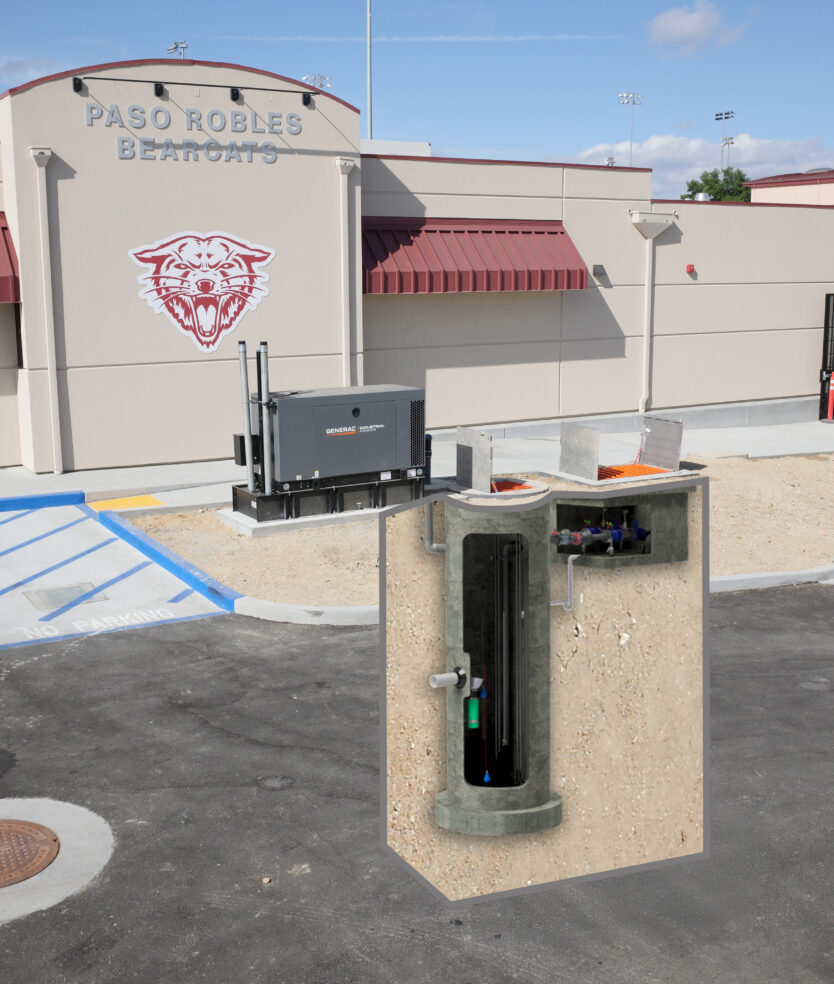
Wastewater touches nearly every part of modern life, but most people only think about it after it becomes a problem. It comes from homes, businesses, schools, hospitals, restaurants, industrial sites, farms, and construction areas. It can include domestic sewage, greywater, industrial process water, agricultural runoff, commercial wastewater, and food and beverage waste. Although each source creates different challenges, every wastewater system must collect, move, treat, test, and manage water responsibly.
In many cases, wastewater moves by gravity through underground pipe networks. However, gravity cannot solve every site condition. Elevation changes, long pipe runs, flat terrain, and complex layouts can all stop gravity flow. When that happens, a wastewater pumping system moves the water to the next point in the collection or treatment process.
As a result, pumping systems play a key role in moving wastewater safely from one point to the next. Pumping systems help protect infrastructure, prevent backups, reduce flooding risk, and support treatment processes. They also help operators monitor performance, maintain safe access, and respond quickly when site conditions change.
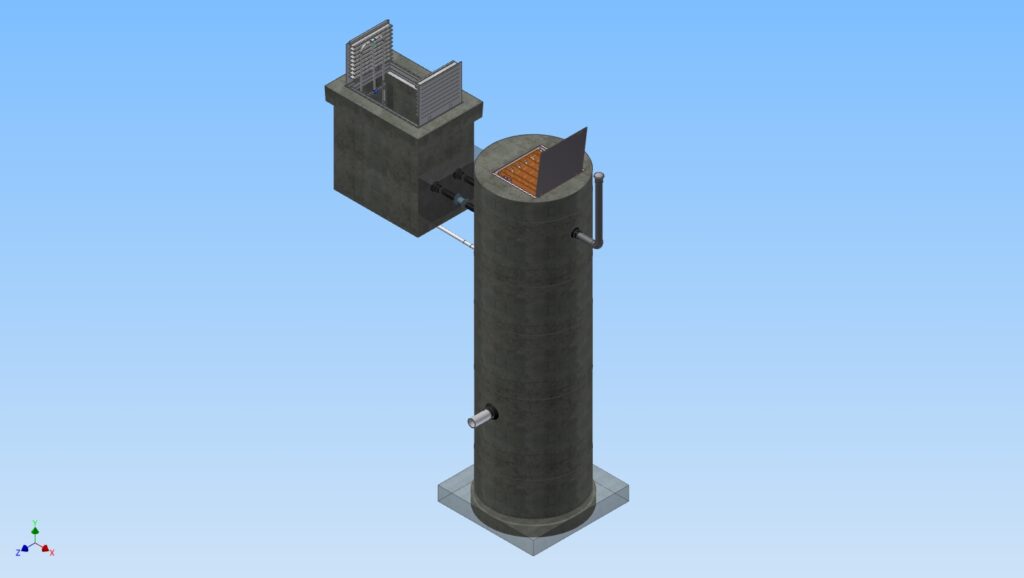
Romtec Utilities designs, manufactures, and supplies wastewater pumping systems for a wide range of applications. Each system includes engineering, prefabrication, delivery, construction support, startup, testing, operator training, warranty support, and project documentation. This full-service approach helps owners, engineers, and contractors match the right materials, pumps, controls, and components to the specific wastewater application.
Early coordination matters. Wastewater projects often involve civil engineers, municipalities, developers, general contractors, equipment suppliers, and facility operators. Each group brings different priorities to the project. Therefore, a coordinated pumping system design can reduce confusion, limit field changes, and keep the project moving forward.
Domestic Sewer Wastewater
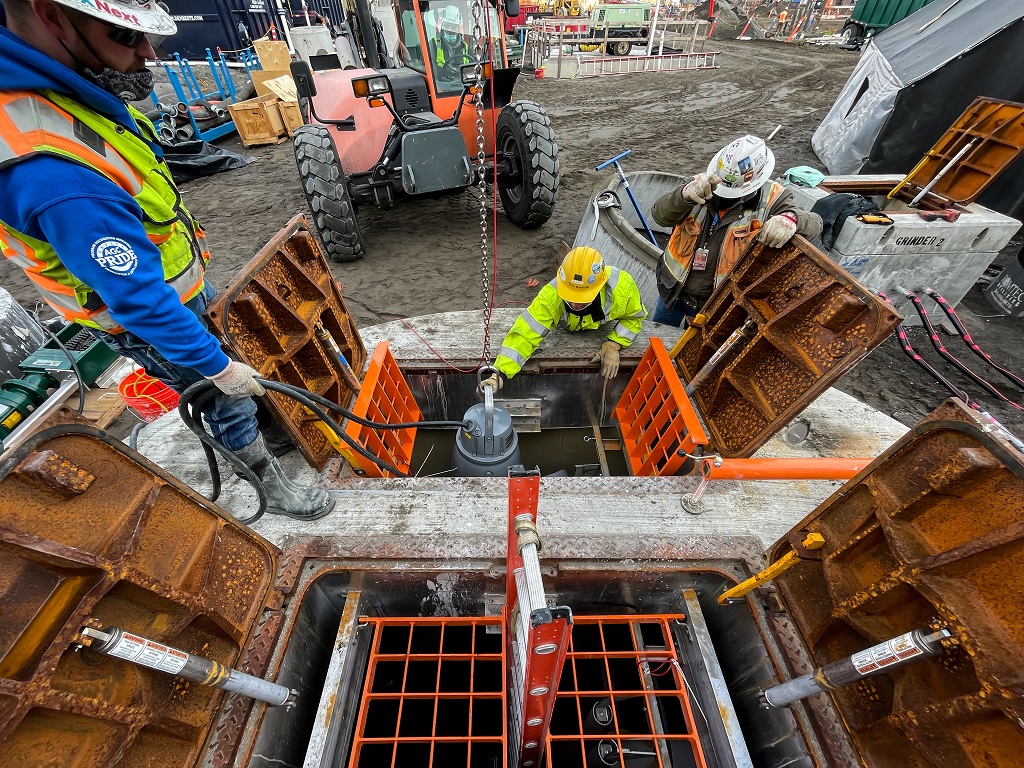
Domestic sewer is one of the most common types of wastewater. It often contains solids, organic matter, and gases that can create serious design challenges inside a pumping system. For example, hydrogen sulfide, or H₂S, can form when sewage becomes warm, stagnant, or septic.
H₂S can corrode concrete, metal, and other materials inside a wastewater system. Because of this risk, sewer pumping system design often requires careful material selection, corrosion protection, coatings, ventilation, and controls that keep flows moving. Romtec Utilities evaluates these needs during design. This helps each system support long-term performance in demanding sewer applications.
Good sewer pumping system design also considers maintenance. Operators need safe access to pumps, valves, controls, and wet well components. They may also need odor control, backup power, alarm notifications, and communication systems that connect to existing operations. These details help the station perform reliably after construction ends.
Residential neighborhoods, commercial developments, public facilities, and municipal collection systems often rely on sewer pumping systems when gravity sewer lines cannot reach the next manhole, force main, or treatment facility. These systems may serve a small subdivision or a much larger service area, depending on flow rates, elevation changes, and future development plans.
Industrial Process Water
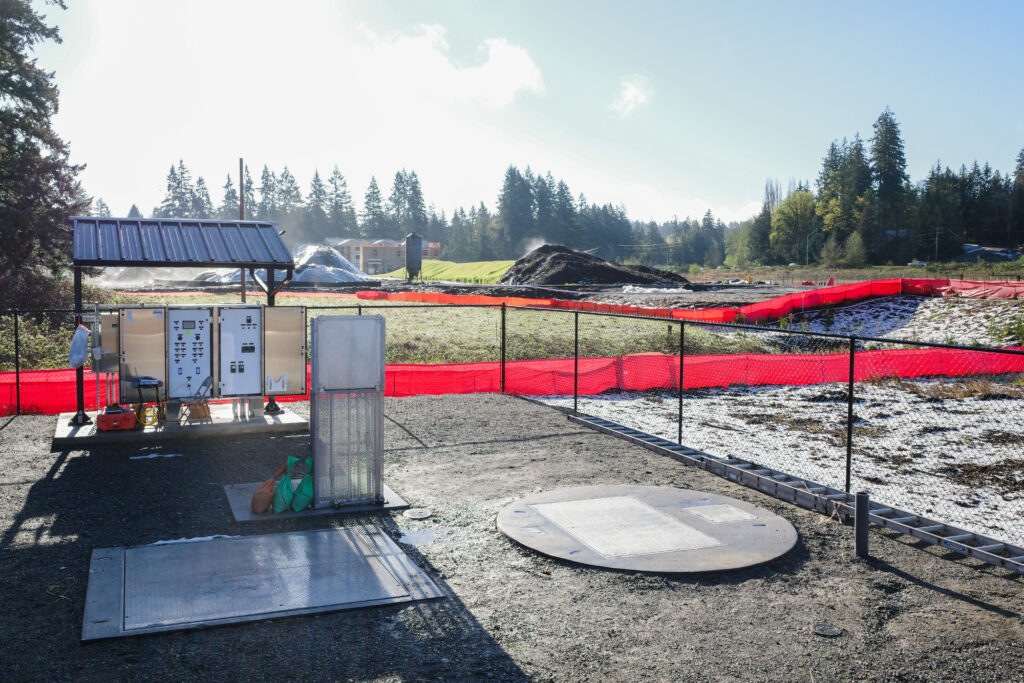
Industrial process water includes wastewater created by manufacturing, processing, and production facilities. These flows can vary widely in temperature, pH, solids content, chemical makeup, and treatment requirements. Therefore, industrial wastewater pump stations often need customized designs.
Unlike public sanitary sewer systems, industrial process water is usually the responsibility of the company that creates it. Many facilities collect, treat, and monitor process water before discharge or reuse. A properly designed pumping system plays a key role in that process. It moves wastewater safely and reliably to the right treatment point.
Industrial wastewater systems may also change over time as production volumes increase, equipment changes, or facilities expand. Because of this, pumping system design should account for current flows and reasonable future demand. Flexible controls, durable materials, and accessible layouts can help industrial owners protect their investment.
Stormwater and Runoff
Stormwater usually begins as rain. In undeveloped areas, it can soak into the ground, move through vegetation, and flow naturally into streams, rivers, lakes, or the ocean. In developed areas, however, stormwater often moves across pavement, rooftops, parking lots, roadways, and industrial sites. Along the way, it can collect sediment, oil, metals, bacteria, trash, and other pollutants.
This runoff can affect water quality when it reaches waterways without proper management. It can also create drainage problems on developed sites. Large paved areas can generate high runoff volumes quickly, especially during intense storms. Without the right conveyance or pumping system, runoff can overwhelm pipes, flood low areas, and delay site operations.
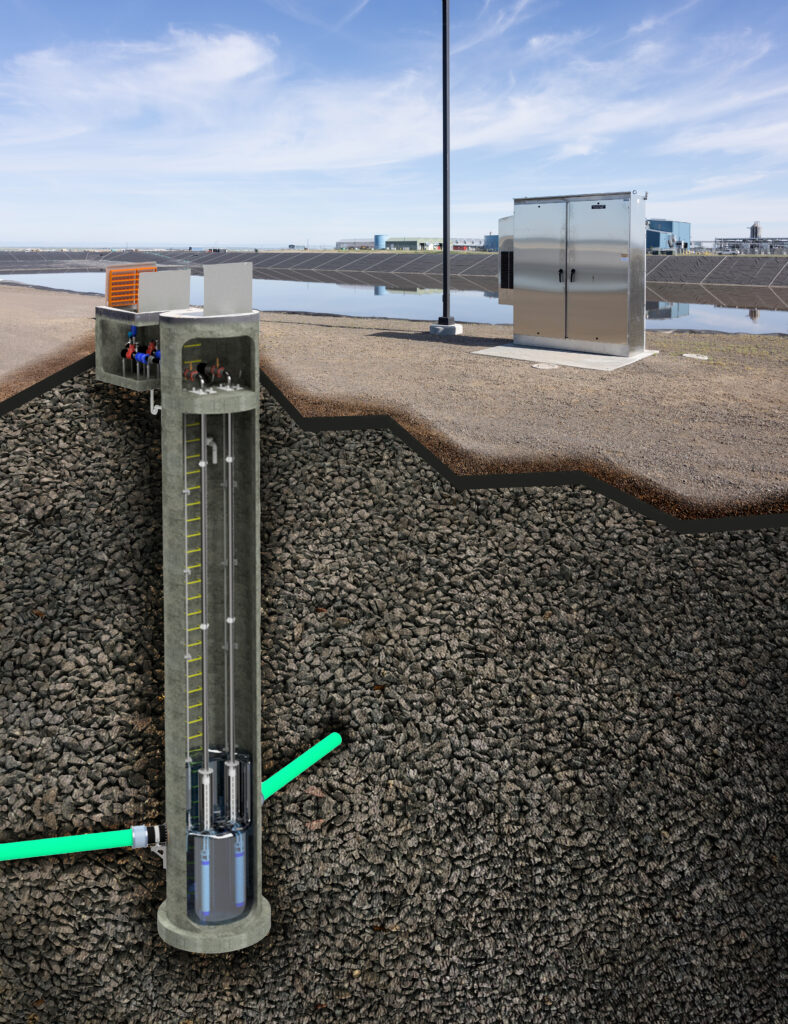
Because of these risks, stormwater management has become a major issue for cities, counties, developers, and public agencies. In many communities, new construction projects must capture, convey, detain, or treat stormwater onsite before it leaves the property. Pump stations support these systems when gravity drainage cannot move runoff to treatment structures, detention basins, discharge points, or reuse systems.
Stormwater pump stations are often used in parking lots, roadways, airports, industrial yards, residential developments, commercial sites, and public infrastructure projects. These systems may pump runoff to detention ponds, treatment structures, outfalls, infiltration systems, or reuse systems. The final design depends on site elevation, storm intensity, drainage area, discharge requirements, and local regulations.
Why Custom Pumping System Design Matters
Wastewater does not come in one form. Therefore, pump stations should not follow one standard design. Domestic sewage, industrial process water, and stormwater all create different risks. Each application may require different pumps, wet well materials, coatings, valves, controls, communications, access features, and construction methods.
A custom design starts with the specific problem the pump station must solve. Engineers consider peak flow, average flow, total dynamic head, wet well volume, power needs, controls, site access, soil conditions, groundwater, and construction sequencing. They also consider how the owner will maintain the system after startup.
Romtec Utilities works with project owners, engineers, contractors, and operators to design wastewater, stormwater, industrial process water, or clean water pumping systems around site conditions, flow requirements, treatment goals, and long-term maintenance needs. This approach helps reduce risk before construction begins and gives each project team a system built for its specific wastewater challenge.
By aligning the pump station with the application, project teams can avoid designs that are too generic, undersized, difficult to operate, or hard to maintain. This matters because wastewater infrastructure must work every day, often in conditions that are wet, corrosive, remote, or difficult to access.
Whether the project involves domestic sewer, industrial process water, or stormwater runoff, Romtec Utilities helps connect design requirements to a practical wastewater pumping system. If your project includes unique flows, site constraints, or treatment requirements, Romtec Utilities can design and supply a custom wastewater pumping system built around the needs of the application.
Ready to solve a wastewater pumping challenge? Romtec Utilities can help you design and supply a custom pump station for your sewer, industrial process water, or stormwater project. Contact our team to discuss your site conditions, flow requirements, and long-term operating needs.
What is wastewater?
Wastewater is used water that comes from homes, businesses, industrial sites, farms, stormwater runoff, and other sources. It may include sewage, greywater, process water, runoff, solids, chemicals, or pollutants that need to be collected, moved, treated, or managed.
Why do wastewater systems need pump stations?
Wastewater systems need pump stations when gravity cannot move water to the next pipe, manhole, force main, treatment system, detention area, or discharge point. Pump stations help move flows across flat sites, uphill routes, long pipe runs, and complex site layouts.
What types of wastewater can a pump station handle?
A pump station can handle several types of wastewater, including domestic sewer, industrial process water, commercial wastewater, agricultural flows, and stormwater runoff. The correct design depends on flow rate, solids content, water chemistry, temperature, site elevation, and treatment requirements.
Why does custom pump station design matter?
Custom pump station design helps match the system to the application. Engineers evaluate flows, total dynamic head, wet well volume, pumps, valves, controls, materials, site access, and maintenance needs. This helps the system perform reliably after startup and through long-term operation.
Can Romtec Utilities design wastewater pump stations for unique site conditions?
Yes. Romtec Utilities designs and supplies custom pumping systems for sewer, industrial process water, stormwater, clean water, and other site-specific applications. Each system can include engineering, prefabrication, delivery, construction support, startup, testing, training, warranty support, and documentation.