
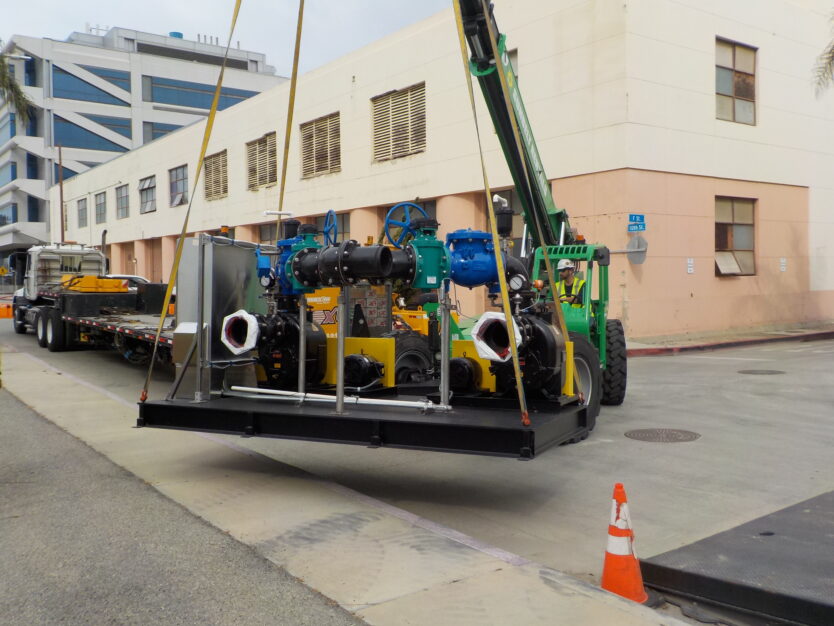
Romtec Utilities designs, manufactures, and supplies pump stations that support potable reuse water and advanced water treatment projects. Across the United States, population growth, drought, groundwater depletion, and changing climate conditions strain traditional water supplies and push utilities to develop more resilient local water supply strategies.
Through advanced purification processes, wastewater can be treated and incorporated into a community’s long-term water supply strategy.
Unlike many traditional water sources, communities generate wastewater consistently regardless of rainfall or seasonal conditions. That reliability makes potable reuse water a valuable option for many communities.
As treatment technologies advance, more utilities are investing in potable reuse programs to supplement existing sources and strengthen long-term water supply planning.
What is a Potable Reuse Water?
Potable reuse water is wastewater that utilities treat through advanced purification processes so it can safely support a drinking water supply. Depending on the project, utilities may use this water for groundwater replenishment, reservoir augmentation, or direct potable reuse applications after meeting strict treatment, monitoring, and regulatory requirements.
Why Potable Reuse Water Matters for Local Water Supply Planning
Traditional water systems generally follow a linear path: communities collect water, treat it, use it, and discharge it. Potable reuse water adds treatment steps that allow utilities to evaluate water to be recycled for drinking water applications.
This approach continues to gain attention in areas where traditional water supplies are limited or vulnerable to drought. Instead of relying only on new water sources, utilities can further treat water and incorporate it into a broader supply strategy.
Potable reuse water is especially relevant in regions that depend on imported water. Southern California, for example, receives water from sources outside the region. This makes local supply development an important part of long-term planning. Reuse projects can help diversify available supplies and reduce dependence on imported water.
Many communities evaluate groundwater replenishment as one application for potable reuse water. In these projects, utilities add highly treated recycled water to groundwater basins, where they can later recover it as part of the drinking water supply.
As more communities study reuse projects, these systems are becoming a larger part of water resource planning – particularly in areas facing ongoing supply challenges.
Why is Potable Reuse Water Important?
Potable reuse water helps communities diversify water supplies, reduce reliance on imported water, and use existing wastewater resources more efficiently. For drought-prone regions and fast-growing communities, reuse projects can improve long-term water reliability when paired with the right treatment and infrastructure.
Key Benefits of Potable Reuse Water
- Supports local water supply development.
- Reduces dependence on imported water.
- Improves long-term resilience in drought-prone regions.
- Helps utilities evaluate advanced treatment processes.
- Supports pilot testing and full-scale treatment planning.
How Advanced Water Treatment Support Recycled Water Safety
Potable reuse water requires treatment beyond conventional wastewater discharge and non-potable reuse applications. Traditional wastewater treatment removes solids, organic material, and many contaminants, but utilities must add advanced purification before they can consider recycled water for drinking water purposes.
The treatment process depends on the facility and the intended use, but many potable reuse systems include advanced filtration and disinfection. Membrane technologies remove small particles and microorganisms, while reverse osmosis, ultraviolet disinfection, and advanced oxidation target dissolved contaminants, pathogens, and trace compounds.
These systems rely on multiple treatment barriers rather than a single purification process. This approach helps monitor performance at different stages and verify that the water meets quality requirements.
Before developing full-scale facilities, many communities conduct pilot studies to evaluate treatment methods and operating conditions. These studies provide data about system performance and help engineers determine how they can apply advanced treatment processes at a larger scale.
Case Study: Hyperion Water Reuse and Resiliency Program
The Hyperion Water Reuse and Resiliency Program in Los Angeles shows how utilities are evaluating large-scale potable reuse water. The program centers on the Hyperion Water Reclamation Plant, one of the largest wastewater treatment facilities in the United States.
Historically, Hyperion discharged treated wastewater to Santa Monica Bay after completing the treatment process. Through the reuse program, Los Angeles is evaluating how additional treatment could allow that water to support future reuse applications.
A major part of the program involves testing advanced treatment technologies through a membrane bioreactor pilot facility. The pilot work helps project teams evaluate treatment performance, develop design criteria, and understand how future full-scale potable reuse water facilities could operate.
The program involves coordination between multiple agencies and technical partners, including the Los Angeles Department of Water and Power, Los Angeles Sanitation and Environment, the Water Replenishment District of Southern California, and the Metropolitan Water District of Southern California.
Hyperion illustrates the planning and testing utilities complete before potable reuse water projects can move toward full-scale implementation. Before purified recycled water can become part of a drinking water supply, utilities must evaluate treatment performance, develop supporting infrastructure, and meet regulatory requirements.
For projects like Hyperion, advanced treatment depends on reliable infrastructure that can move water consistently through each stage of pilot testing and treatment evaluation.
Pump Station Infrastructure for Potable Reuse Water Projects
Advanced treatment processes are central to potable reuse water projects, but utilities also need supporting infrastructure to move water through each stage of treatment. Pump stations, storage systems, controls, and piping networks help maintain consistent flow through treatment facilities and pilot systems.
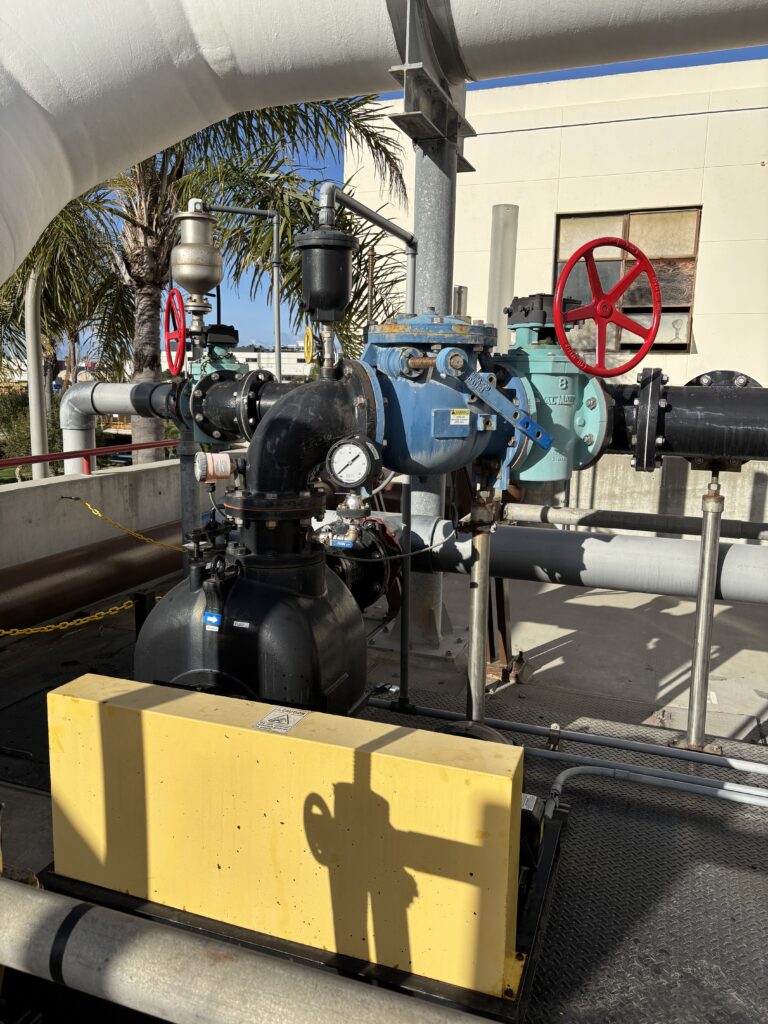
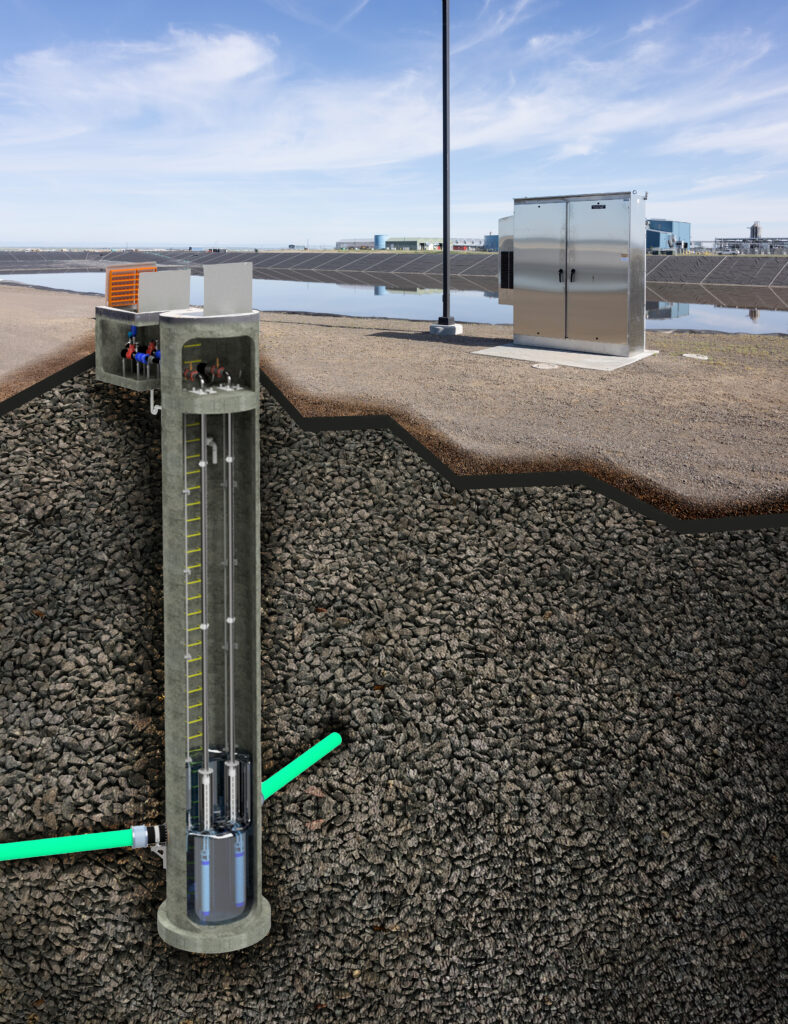
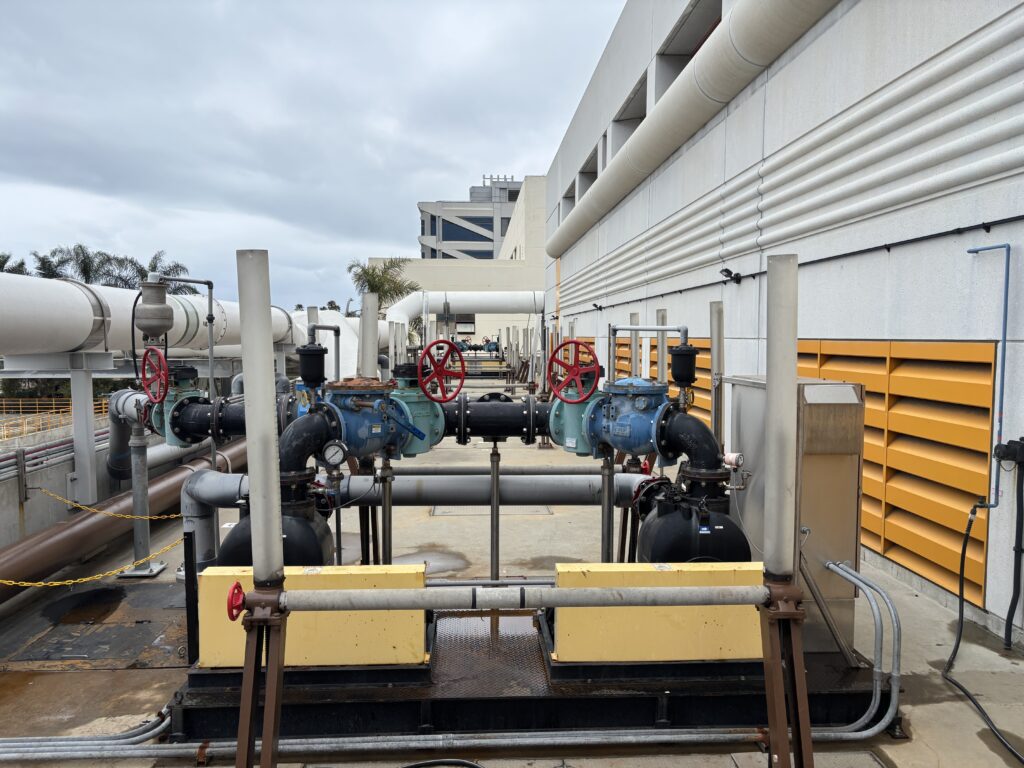
As part of the Hyperion Water Reuse and Resiliency Program, Romtec Utilities designed, manufactured, and supplied a pump system to support a membrane bioreactor pilot facility. The system included a wastewater lift station and two self-priming pump skids used to transfer water through different stages of the pilot process.
Romtec Utilities worked with Stantec during the early design phase to assist with pump sizing, system requirements, and specification development. This coordination helped ensure the equipment matched the operating conditions of the pilot facility and could be incorporated into the larger project.
While the pump station represents only one component of the overall Hyperion program, it supports the testing and evaluation of treatment technologies being considered for future potable reuse water applications.
How Romtec Utilities Supports Potable Reuse Water Projects
Romtec Utilities provides custom-engineered pump systems that help move water through pilot facilities, treatment processes, and supporting infrastructure. These systems can include lift stations, pump skids, controls, and project-specific equipment designed around site conditions, flow requirements, and treatment objectives.
Key Takeaways for Potable Reuse Water Infrastructure
As utilities evaluate additional water supply options, potable reuse will likely become a larger part of water planning, particularly in regions with limited freshwater availability. Advances in treatment technology have created new opportunities to recover and purify water that facilities would otherwise discharge.
However, successful potable reuse water projects require more than advanced treatment processes alone. Utilities must address regulatory requirements, public acceptance, infrastructure needs, and operational considerations before purified recycled water can become part of a drinking water supply.
The Hyperion Water Reuse and Resiliency Program demonstrates the level of testing, planning, and coordination required for large-scale potable reuse water initiatives. By combining advanced treatment research with supporting infrastructure, the project helps evaluate how purified recycled water could contribute to Los Angeles’ future water supply strategy.
Romtec Utilities helps engineers, utilities, and project teams design pump station systems that support advanced treatment, pilot testing, and long-term water infrastructure goals. Contact Romtec Utilities to discuss pump station solutions for your next water reuse or wastewater treatment project.
What is potable reuse water?
Potable reuse water is wastewater that has been treated through advanced purification processes so it can safely support a drinking water supply. Depending on the project, utilities may use potable reuse water for groundwater replenishment, reservoir augmentation, or direct potable reuse applications.
Why are pump stations important for potable reuse water projects?
Pump stations help move water through treatment facilities, pilot systems, storage areas, and other project infrastructure. Reliable pump station design helps utilities maintain consistent flow through each stage of treatment and testing.
How does Romtec Utilities support potable reuse water infrastructure?
Romtec Utilities designs, manufactures, and supplies custom pump station systems for water reuse, wastewater treatment, pilot testing, and advanced treatment projects. These systems can include lift stations, pump skids, controls, and project-specific equipment designed around site conditions and treatment goals.