
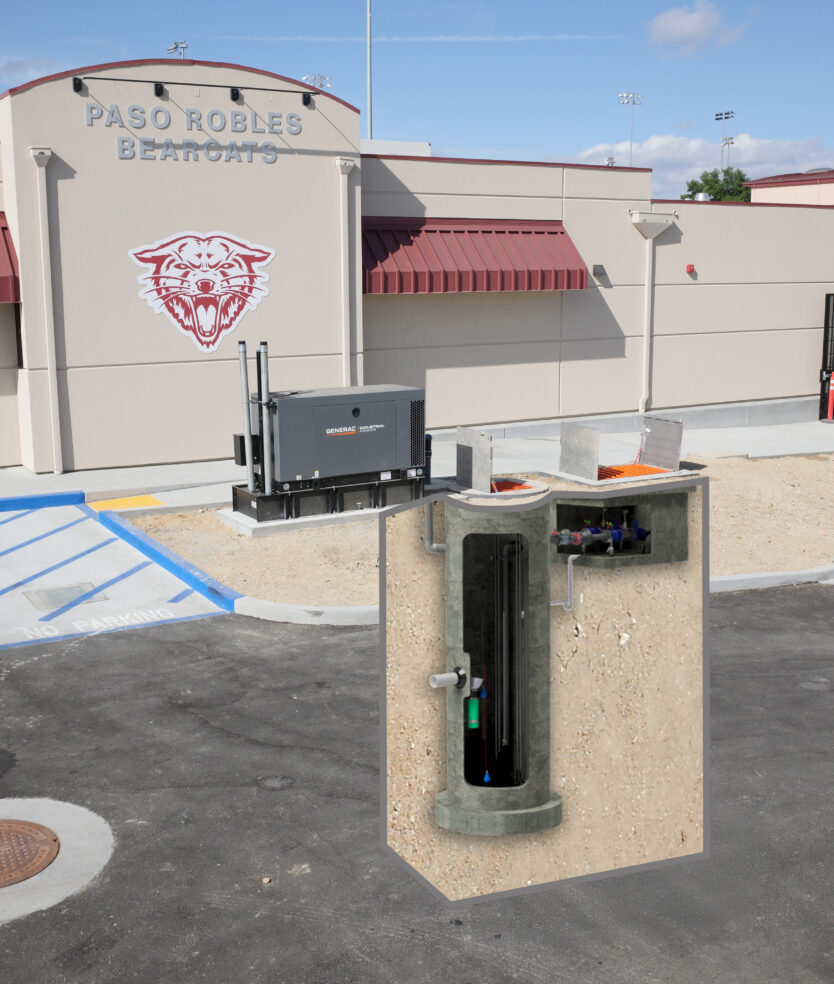
Pump stations are one of the most important pieces of infrastructure most people never see. They move wastewater out of neighborhoods, keep stormwater from overwhelming sites, maintain pressure in potable water systems, and support industrial processes that depend on reliable water movement every day. While the term often starts with wastewater collection, it applies to a much wider range of systems that keep communities, developments, and facilities operating.
At Romtec Utilities, site-specific pumping systems are what we do. Our team designs and supplies complete packaged pump systems for a wide range of applications, and that experience has shown us one important truth: the best design is never one-size-fits-all. It depends on the water type, site conditions, owner requirements, hydraulic conditions, controls, and long-term operation of the system.
What is a Pump Station?
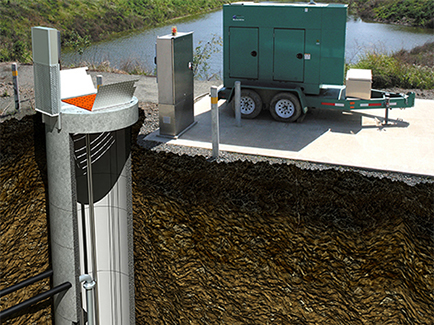
To understand why custom engineering matters, it helps to start with a basic definition. A pump station is a permanent pumping system designed to move water, wastewater, stormwater, or industrial process water from one location to another when gravity flow, pressure, elevation, or site conditions require mechanical pumping. In most cases, it includes structural, mechanical, electrical, power, control, and communication components that work together as one integrated system.
The concept started largely in sewer and wastewater collection, where lift stations move sewage from a lower elevation to a higher elevation so gravity flow can continue. Today, engineers, municipalities, developers, contractors, and industrial owners use the term to describe many types of pumping infrastructure.
Wastewater Pump Stations and Gravity Flow
In the United States, most wastewater collection systems rely on gravity. Water from homes, businesses, and public facilities typically flows through buried sewer mains toward a treatment plant. As a result, when terrain, depth, or distance prevents gravity flow from continuing, a lift station raises the flow to a higher elevation so the system can keep moving.
These systems may be small private lift stations serving an individual building, or large municipal stations serving subdivisions, commercial developments, industrial users, or entire service areas. Regardless of size, the basic goal is the same: move wastewater reliably, safely, and efficiently to the next point in the collection system.
Wet Wells, Submersible Pumps, and Level-Based Operation
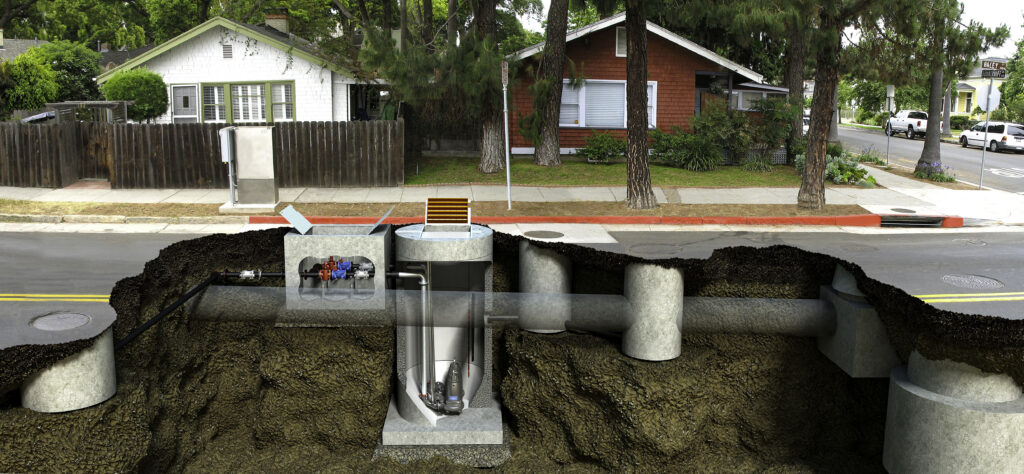
In many of these application, wastewater and stormwater systems use a below-grade wet well. Water enters by gravity, rises to a set level, and triggers one or more pumps to start. The pumps move the flow through discharge piping until the level reaches a predetermined stop point.
Submersible pumps are commonly used in these systems because they operate inside the wet well. In many duplex systems, two pumps alternate starts and also provide redundancy if one pump needs maintenance or fails. Larger systems may require higher horsepower, three-phase power, advanced controls, and careful consideration of Total Dynamic Head (TDH), flow rates, access, maintenance, and operator safety.
Private, Public, and Industrial Pumping Systems
Beyond operation, ownership also matters because it affects how a system is designed, accessed, maintained, and monitored. Smaller private stations are often owned by homeowners, businesses, or private developments. These compact systems still need dependable pumps, controls, alarms, and maintenance access.
Larger public and industrial systems usually move higher flows against greater resistance. They may serve a utility district, municipality, commercial site, manufacturing facility, or regional infrastructure project. These applications often require robust structural design, larger mechanical assemblies, dedicated electrical service, backup power planning, controls integration, and long-term maintenance strategies.
Potable Water Booster Stations
In contrast, potable water applications often use booster stations to maintain pressure in a distribution network. Unlike typical wastewater or stormwater applications, these stations usually start and stop based on pressure, not wet well level.
As water demand increases, system pressure can drop. A booster station responds by starting one or more pumps to maintain the required pressure. When demand decreases, the station reduces pumping or returns to normal operation. These systems are critical for public water districts, high-demand facilities, industrial sites, and developments where consistent pressure is essential.
Industrial Pump Station Applications
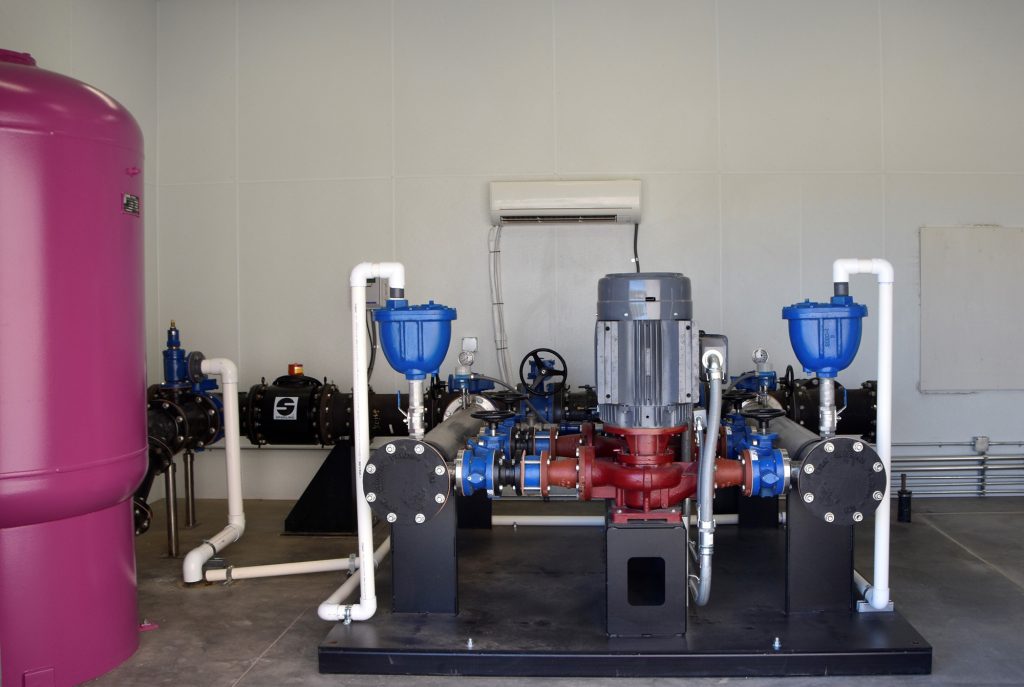
Similar, industrial applications can be even more site specific. A system may move process water, cooling water, wastewater, leachate, or another liquid tied directly to facility operations. The design must account for the fluid characteristics, operating environment, required flow and pressure, and consequences of downtime.
For example, an industrial food processing facility may need pumps to transfer water through production. A power generation facility may need pumping equipment to support cooling water circulation. A landfill may need a leachate system to collect and move contaminated liquid to treatment. These may all fall under the same broad category, but each requires a very different design.
Why Pump Station Design Requires Experience
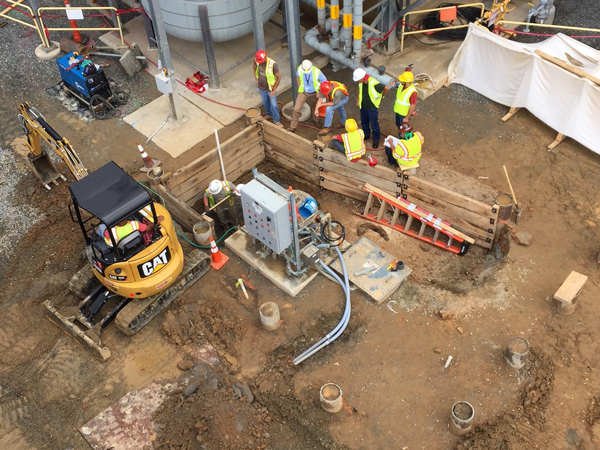
There is no single “standard” design that fits every project. Stormwater systems must manage changing rainfall events and site drainage. Wastewater lift stations must handle solids, odors, maintenance access, and sanitary sewer requirements. Potable water booster stations must maintain pressure and protect drinking water quality. Industrial systems must match the process, fluid characteristics, and operational demands of the facility.
That is why Romtec Utilities approaches every project as a custom-engineered integrated system. We evaluate hydraulic requirements, wet well or building structure, pump selection, valves, piping, electrical service, control panels, telemetry, safety features, coatings, access needs, and owner standards together. By coordinating these components early, Romtec Utilities helps reduce gaps between disciplines and supports a practical, buildable, long-lasting packaged solution.
Romtec Utilities Designs Custom-Engineered Pump Stations for the Application
Romtec Utilities designs and supplies custom-engineered packaged systems for wastewater, stormwater, clean water, booster, and industrial applications. Our role is to help engineers, contractors, municipalities, developers, and private owners define what the system needs to do, then align mechanical, electrical, structural, and control components around project-specific requirements from design through installation and start-up.
Whether the project requires a small lift station, a high-flow stormwater system, a potable water booster station, or industrial pumping equipment, the right design starts with understanding the application. Romtec Utilities does not rely on generic packages. We develop custom-engineered systems that reflect the site, flow, pressure, controls, materials, access, and owner standards that matter to the project.
Need Help Defining the Right Pump Station?
The right pump station does more than move water. It protects infrastructure, supports daily operations, reduces risk for owners, and helps keep projects running after construction is complete. Romtec Utilities brings the engineering coordination, application knowledge, and packaged system experience needed to turn complex pumping requirements into a practical, custom-engineered solution. If your next project needs wastewater, stormwater, booster, clean water, or industrial pumping infrastructure, Romtec Utilities can help define the system, simplify the process, and move the project forward with confidence.
What is the difference between a pump station and a lift station?
A lift station is a type of pump station commonly used in wastewater collection to raise sewage from a lower elevation to a higher elevation so gravity flow can continue. Pump station is a broader term that can also apply to stormwater, potable water, booster, clean water, and industrial pumping systems.
What does a packaged pump station include?
A packaged pump station can include the wet well or structure, pumps, valves, piping, control panel, electrical components, telemetry, access hatches, safety features, coatings, and other project-specific components. Romtec Utilities coordinates the structural, mechanical, electrical, and controls and communication elements as one integrated system.
When is a booster station needed?
A booster station is needed when a potable water or clean water system needs additional pressure to meet demand, serve higher elevations, support high-use facilities, or maintain consistent pressure across a distribution network.
Why does pump station design need to be custom-engineered?
Each project has different flow rates, site conditions, water types, pressure requirements, controls, utilities, access needs, and owner standards. A custom-engineered approach, such as the one taken by Romtec Utilities, helps align the mechanical, structural, electrical, and control components around the specific application.
What types of pump stations does Romtec Utilities design?
Romtec Utilities designs custom-engineered packaged pump stations for wastewater, stormwater, potable water, booster, clean water, and industrial applications. Each system is developed around the project’s hydraulic requirements, site conditions, controls, materials, and long-term operation.