
Tyngsborough, Massachusetts, Commercial Sewer Lift Station
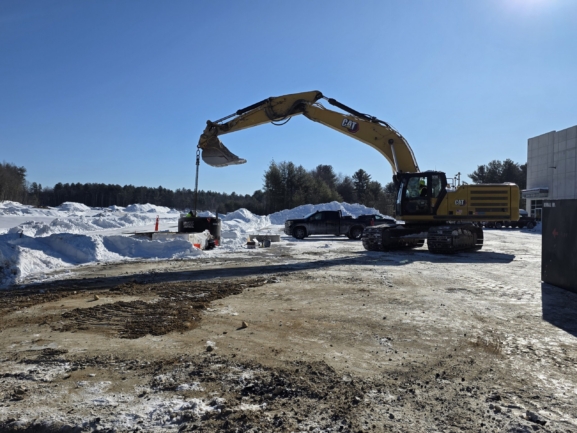

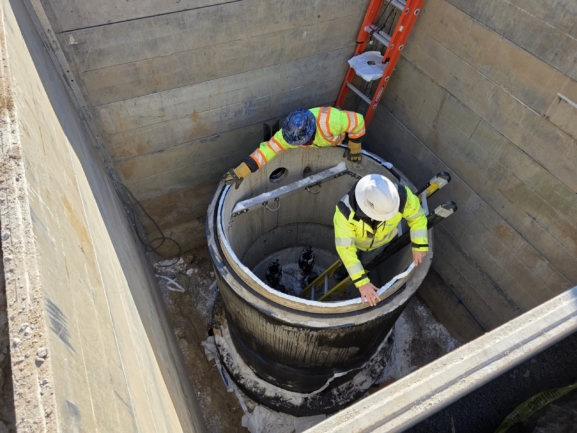

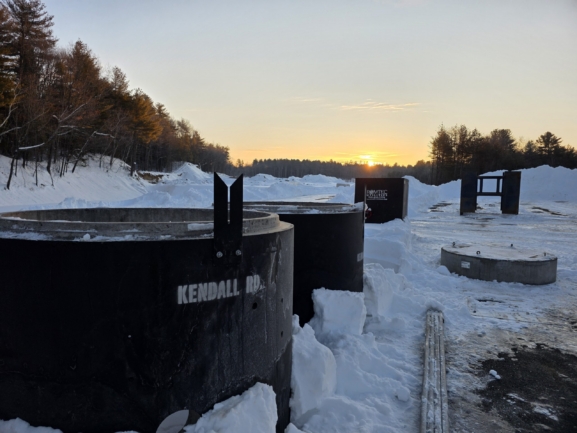

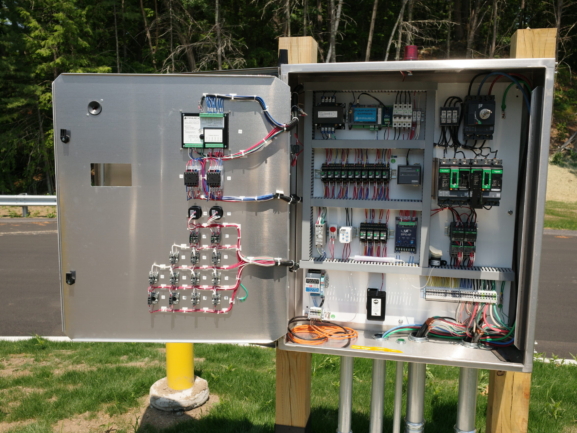

Romtec Utilities designed, build, and supplied a commercial sewer lift station for the Kendall Road Business Park in Tyngsborough, Massachusetts. As commercial developments expand, reliable sewer infrastructure supports new buildings, protects public health, and keeps operations running efficiently. This project includes two separate lift stations that will serve a phased commercial development under private ownership and maintenance.
The project team developed the system to handle low-volume sanitary flows while maintaining efficiency, reliability, and cost control. By focusing on a practical and streamlined design, the project team created a solution that supports current needs without adding unnecessary complexity.
Kendall Road Business Park and Sewer Lift Station Site Overview
The Kendall Road Business Park is a commercial development project in Tyngsborough, Massachusetts. The site needs new sewer infrastructure to support future buildings and operations within the development. Located in Middlesex County near the New Hampshire border, Tyngsborough continues to experience commercial growth that requires new utility infrastructure to support future development.
This project includes two lift stations that a private owner will maintain. Because of this, the design approach differs from municipal systems, which typically require higher levels of complexity and stricter standards.
The Town of Tyngsborough serves as the governing authority, and a third-party reviewer provides oversight on behalf of the town. Initial feedback from the review process has closely followed standards used for publicly owned lift stations, even though a private owner will operate the pump system.
This situation required the project team to balance local expectations with a system design appropriate for private use.
Commercial Sewer Lift Station Design
The commercial sewer lift station design for this project focuses on simplicity, efficiency, and long-term operation. The Phase 1 lift station is considered the critical component and is designed to support initial development needs, while the Phase 2 system is planned for future expansion.
The Phase 1 system handles very low flows, with an average daily flow of approximately 1,200 gallons per day and peak flows under 5 gallons per minute. Because of this, the system design needed to reflect actual demand rather than default to larger municipal standards.
The lift station uses a duplex pump configuration with two 3 horsepower pumps. This setup allows one pump to operate during normal conditions while the second provides backup for reliability.
The system is designed to pump up to 51 gallons per minute with a total dynamic head of approximately 58 feet. Power is supplied through a 208-volt three-phase connection, supporting stable operation.
The system includes a single 3-inch high-density polyethylene force main, extending over a long run before reaching its discharge point. Incoming flow enters through a 6-inch influent pipe provided by others.
A 6-foot diameter wet well provides storage and operational space for the system. Elevation points throughout the system are designed to support proper cycling, with defined levels for pump start, stop, and alarm conditions.
Site Challenges and Requirements
One of the primary challenges for this project is balancing system design with local review standards. The town and its reviewer have applied standards typically used for publicly owned lift stations, including minimum force main sizing requirements.
For this project, those standards can create potential issues. Increasing the force main size beyond what is required for the actual flow can impact system performance and create unnecessary complexity. In low-flow applications, oversized infrastructure can lead to slower wastewater velocities, making it harder to keep solids moving through the system. It can also increase overall project cost without improving reliability.
Because the system is privately owned, it is important to avoid overdesign. A larger, municipal grade system can introduce challenges related to maintenance, cost, and long-term operation that are not needed for this type of development.
Another challenge is the phased nature of the project. The Phase 1 lift station must be completed on a defined timeline and is critical to moving construction forward. The Phase 2 system is less time-sensitive but must still be planned to accommodate future flows.
Engineering Approach and Solution
To address these challenges, the project team focused on a right-sized design for the commercial sewer lift station. This approach ensures the system meets actual demand while remaining reliable and cost-effective.
The duplex pump configuration provides built-in redundancy without adding unnecessary complexity. The system is designed to operate efficiently at low flow rates while still having capacity for occasional increases in demand.
Careful consideration was given to force main sizing and system hydraulics. The goal is to maintain proper flow conditions without oversizing components. This helps prevent issues such as solids settling and reduces wear on system components.
Romtec Utilities supports this process by working with the design team and stakeholders to clarify requirements and provide practical recommendations during review. This includes helping address questions around standards and ensuring the final system aligns with both project needs and long-term operation.
The Phase 2 lift station will be designed separately to accommodate future development. This phased approach allows the system to grow with the site rather than overbuilding at the start.
Project Team for the Commercial Sewer Lift Station
This project came together in collaboration between several key groups:
- Developer: Marcus Partners
- Engineer: Kelly Engineering Group
- General Contractor: Onyx Corporation
- Governing Authority: Town of Tyngsborough, Massachusetts
Each team plays an important role in delivering the commercial sewer lift station. Coordination between the developer, engineer, and contractor helps ensure the system meets both project goals and local requirements.
Designing Wastewater Pumping Systems to Meet Your Needs
The Kendall Road Business Park project demonstrates how a commercial sewer lift station can be designed to meet the needs of a private development while addressing local review requirements.
The Kendall Road Business Park project highlights the value of designing infrastructure around actual operating conditions. By creating a right-sized commercial sewer lift station that supports current needs while allowing for future expansion, the project team was able to develop a practical, reliable, and cost-effective wastewater solution. As commercial developments continue to grow, properly engineered lift stations remain an important part of long-term site success.